
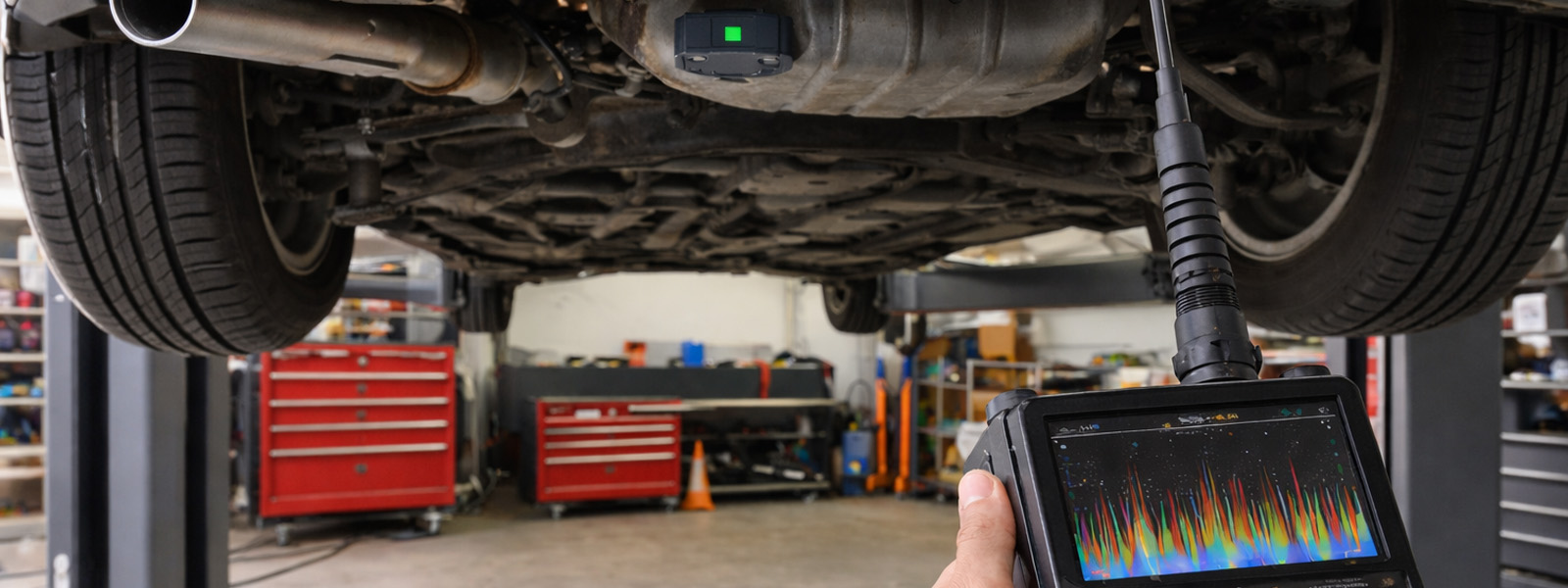
How to Check a Vehicle for a Tracker
Most concerns investigated involve Bluetooth-based trackers or misunderstandings rather than sophisticated covert systems. However, when tracking does occur, it is typically done using simple, commercially available devices.
This guide explains practical steps you can take safely, what to look for, what to avoid, and when a professional inspection may be appropriate.
If you would prefer a structured inspection, see our vehicle sweep service.
What Types of Vehicle Trackers Are Common?
Vehicle tracking generally falls into two categories.
Bluetooth-Based Trackers (Most Common)
Devices such as Apple AirTags and similar Bluetooth tracking tags are now the most frequently encountered items in domestic situations.
- Use nearby smartphones to update location
- Do not require installation
- Small and battery-powered
- Often detectable via smartphone alerts
In many cases, a smartphone scan will identify their presence.
Dedicated GPS Tracking Devices
Traditional GPS trackers are less common but still used in some circumstances.
- Magnetically attached
- Battery-powered
- Hard-wired to the vehicle
- Connected via the OBD port
These devices transmit location data directly to a remote user.
Step by Step: How to Check a Vehicle for a Tracker
Step 1: Scan for Bluetooth Trackers
For iPhone users
- Check for safety alerts in the Find My app
- Follow on-screen instructions if an unknown tracker is detected
For Android users
- Use built-in unknown tracker alerts if available
- Use a compatible tracker detection app
Allow the scan to complete both inside and outside the vehicle.
Step 2: Check the Exterior
Inspect accessible areas safely.
- Under wheel arches
- Behind bumpers
- Under the chassis
- Tow bar assemblies
- Roof racks
Look for small boxes, magnetic devices, or recently attached items.
Do not place yourself in unsafe positions under a vehicle.
Step 3: Inspect the OBD Port
The OBD port is usually located under the dashboard on the driver’s side.
Look for:
- Unfamiliar devices plugged in
- Splitters or extra wiring
Any unknown device should be assessed carefully before removal.
Step 4: Check Interior Areas
- Under seats
- Inside seat pockets
- Centre console
- Glove box
- Boot compartments
Bluetooth trackers are small and can be hidden inside personal items.
Step 5: Listen for Audible Alerts
Some trackers emit a periodic sound after being separated from their owner.
If you hear a faint chirp, investigate calmly and methodically.
What Not to Do
- Do not dismantle trim panels
- Do not remove factory electronics
- Do not damage suspected devices
- Do not confront someone without evidence
If legal matters are involved, improper handling may affect evidence.
When to Seek Professional Inspection
- You cannot locate a suspected device
- You suspect a hard-wired tracker
- There is a legal dispute
- You require documentation
- You want a structured inspection
Professional inspections use RF analysis, NLJD, Bluetooth scanning, and structured physical inspection.
For professional assistance, see our vehicle bug sweep service.
Queensland Legal Considerations
- Installing tracking devices without authority may breach the law
- Removing a device may have legal implications
- Improperly obtained evidence may not be admissible
If criminal activity is suspected, seek police advice.
How Common Is Vehicle Tracking?
Most concerns involve Bluetooth trackers rather than covert GPS systems.
In many cases:
- No device is present
- The device belongs to someone known
- The concern relates to a misunderstanding
The purpose of inspection is to resolve uncertainty, not confirm assumptions.
Peace of Mind Matters
Most vehicles are not being actively tracked.
When genuine risk exists, a structured inspection provides clarity and removes uncertainty.
Frequently Asked Questions
Can someone track my car without me knowing?
Yes, but most commercially available trackers are detectable using standard tools.
Are AirTags commonly used?
Yes. Bluetooth trackers are more common than traditional GPS devices.
Will a professional inspection damage my vehicle?
No. Inspections are non-invasive and focus on accessible areas.
How long does an inspection take?
Typically one to two hours depending on the vehicle.