Hidden Cameras in Airbnb & Hotels: How to Check Your Room
Most Airbnb stays and hotel rooms are completely safe. The reality is that hidden cameras are now small, cheap and easy to conceal inside everyday objects. If something feels off, it is reasonable to check your room before settling in.
This guide explains where devices are typically hidden, what you can realistically check yourself, and how to think about the risk without overreacting.
Quick Answer
- Check areas facing beds and bathrooms first
- Inspect smoke alarms, vents, chargers and alarm clocks
- Look for small lenses, pinholes or unusual openings
- Unplug non-essential electronic devices where possible
- Most concerns are resolved with a basic visual inspection
Why People Worry About Hidden Cameras
Hidden cameras are a concern because they no longer look like cameras. They can be built into common items such as smoke alarms, USB chargers, power adaptors, clocks and air fresheners.
The real issue is privacy. Bedrooms, bathrooms and change areas are private spaces. Anything recording in those areas without consent is a serious breach, and even the suspicion of it can make it difficult to relax.
This guidance is based on hands-on experience building, testing and detecting surveillance devices, including real-world inspections of homes, offices and accommodation across Queensland.
Common Hiding Spots in Airbnb and Hotel Rooms
If you want to check a hotel room for cameras, focus on areas that have a clear view of private spaces. Hidden cameras in Airbnb and hotel environments rely on line of sight.
- Smoke alarms and ceiling-mounted sensors
- Air vents and air conditioning units
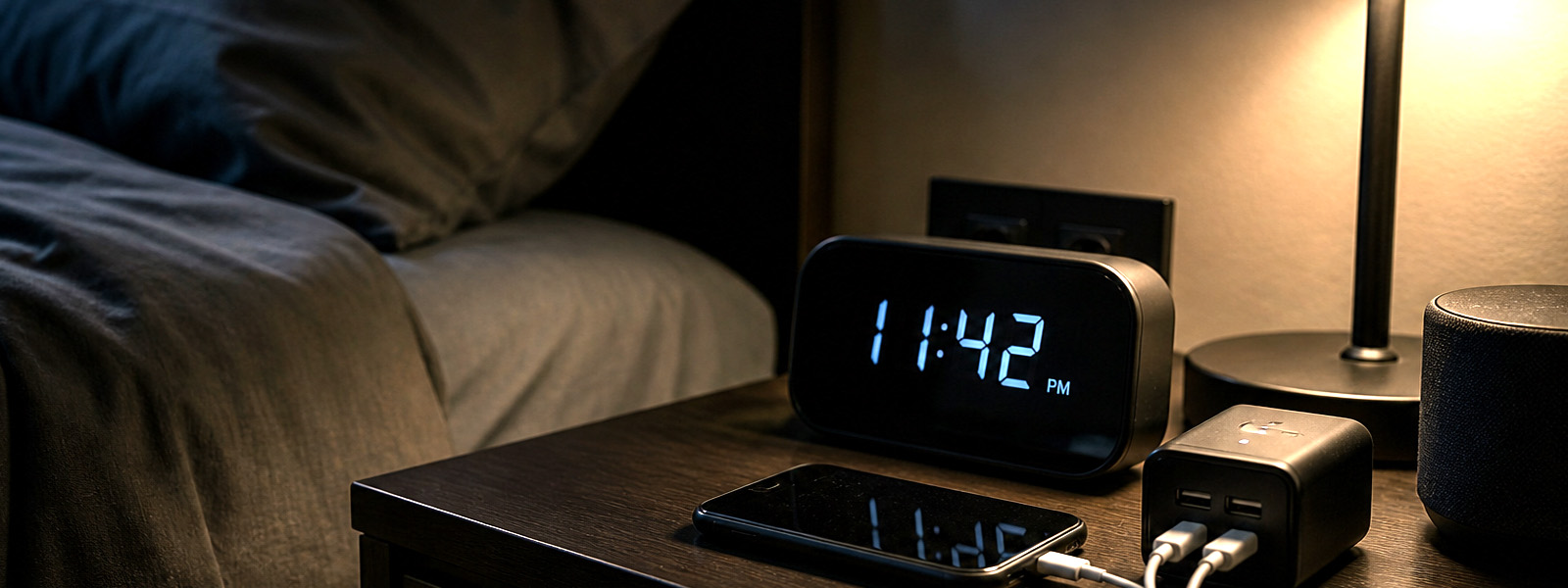
- Alarm clocks and bedside electronics
- USB chargers and power adaptors
- Televisions and media equipment
- Picture frames and decorative items
- Mirrors facing beds or bathrooms
- Bathroom exhaust fans and ceiling panels
- Any object with a small hole aimed at a private area
Bedrooms and bathrooms should always be checked first, as these are the highest-risk areas for privacy concerns.
Quick Checks You Can Do Yourself
Start with a slow visual inspection. Look for anything that seems out of place, recently added, or positioned in a way that does not make sense.
Use your phone torch and inspect suspicious items closely. Camera lenses can sometimes reflect light. Look for small glass lenses, dark circles or pinhole openings.
You can check the room’s WiFi network for unknown devices, but this has limits. Many devices either do not appear clearly or record internally without using WiFi.
Another simple step is to unplug non-essential electronics such as alarm clocks or chargers. Do not damage anything, but removing power from unnecessary items reduces risk while you are in the room.
Using Lens Detectors
Some people use lens detectors as part of a basic check. These are small handheld devices that emit light and help identify reflective camera lenses.
They can be effective at close range, particularly when checking objects directly in front of you such as clocks, vents or small electronics. When used properly, they can help highlight the glass surface of a camera lens that may not be obvious to the eye.
However, they are not a complete solution. They require slow, methodical use and only work when the device is aimed directly at the suspected object. They will not detect hidden cameras behind materials, inside walls or devices that are not in direct line of sight.
Lens detectors are widely available through reputable security retailers, including specialist suppliers such as OzSpy, and can be a useful addition if you want an extra level of checking beyond a visual inspection.
The Limits of DIY Checks
DIY methods are useful, but they are not definitive. Some devices are battery powered, some only transmit occasionally, and others store recordings internally without sending any signal.
Phone apps and low-cost detectors can miss devices or trigger on normal electronics such as WiFi routers and Bluetooth devices. This can create false alarms or false confidence.
No basic check can confirm that a room is completely clear. It can only reduce obvious risk.
When Concern Is Justified
Most stays do not involve surveillance. That said, concern is more justified if:
- An object is clearly aimed at a bed, bathroom or private area
- A device looks modified, tampered with or out of place
- There are unexplained electronics in unusual locations
- You have reason to believe someone has accessed the room before you arrived
If something genuinely does not feel right, trust that instinct. It is rare, but not impossible.
Final Thoughts
If you are worried about hidden cameras in an Airbnb or hotel, focus on the basics. Check areas facing beds and bathrooms, inspect common hiding spots, and remove power from anything unnecessary.
In most cases, a calm and methodical check is enough to resolve the concern. When it is not, taking the situation seriously is the right approach.
Common Questions
Can Airbnb or hotel rooms have hidden cameras?
Yes, but it is rare. Most properties are legitimate. Cases that do occur usually involve devices hidden in everyday objects with a clear view of private areas.
How do I check a hotel room for cameras?
Focus on areas facing beds and bathrooms. Inspect smoke alarms, vents, chargers and electronics. Look for small lenses or unusual openings and unplug anything you do not trust.
Do hidden cameras need WiFi?
No. Some transmit over WiFi, but others record internally to a memory card. This means network scanning alone will not find every device.
Can a phone detect hidden cameras?
Not reliably. Phones can assist with basic checks, but they are not designed to detect concealed surveillance devices in a consistent or accurate way.
What do hidden cameras look like?
Many look like normal household items. Common disguises include smoke alarms, USB chargers, clocks and small electronics with a pinhole lens.
Is it worth worrying about hidden cameras?
For most people, no. The risk is low. A quick check for peace of mind is reasonable, but ongoing concern is usually not justified unless there are clear signs.