
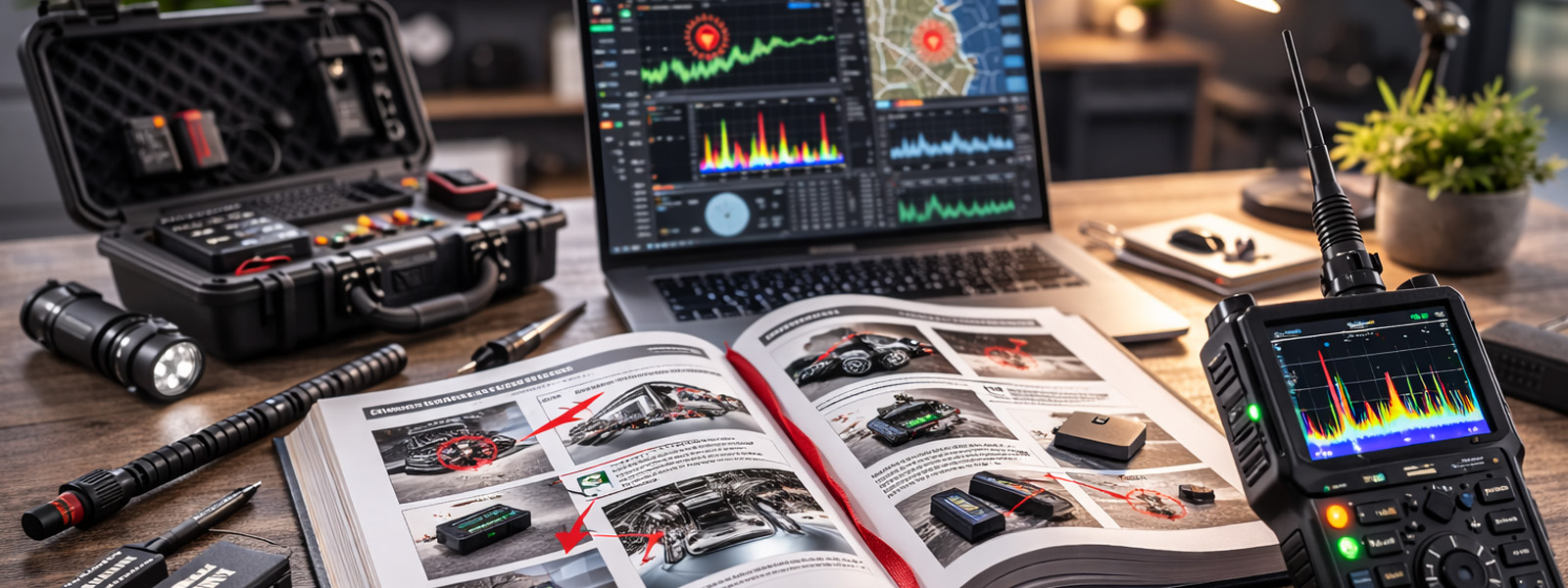
Complete Guide to Bug Sweeping in Queensland
Bug sweeping, also known as Technical Surveillance Counter-Measures (TSCM), is the professional process of detecting hidden surveillance devices such as concealed cameras, listening devices, GPS trackers, and unauthorised wireless transmitters. In Queensland, most privacy concerns turn out to have ordinary explanations, but genuine surveillance risks can arise in domestic disputes, business conflicts, stalking situations, or high-confidentiality environments.
This complete guide explains what bug sweeping involves, the realistic signs of surveillance, how professional inspections are conducted, relevant Queensland legal considerations, and when a structured, non-invasive inspection may be appropriate.
Signs Your Home May Be Under Surveillance
If something feels unusual in your home, it is natural to want clarity. Most concerns turn out to have ordinary explanations, but occasionally there are legitimate privacy risks that deserve careful attention.
This guide explains:
- What “home surveillance” actually means
- Realistic signs to look for
- Common false alarms
- When professional technical surveillance counter-measures (TSCM) may be appropriate
- Queensland-specific considerations
The goal is simple: calm, practical information so you can make informed decisions.
What Does “Home Surveillance” Mean?
Home surveillance refers to the unauthorised monitoring of activities inside or around a private residence. This may include:
- Hidden cameras
- Concealed microphones (audio transmitters)
- GPS tracking devices on vehicles
- Compromised smart devices or Wi-Fi networks
In Queensland, installing a listening device to record private conversations without consent is generally unlawful under the Invasion of Privacy Act 1971 (Qld). However, technology is widely available, inexpensive, and sometimes misused in domestic disputes, tenancy conflicts, or business disagreements.
Who Typically Requests a Home Bug Sweep?
After 30 years working in electronic counter-surveillance across Queensland, the most common scenarios are:
- Relationship breakdowns or family court disputes
- High-conflict separations
- Business disputes
- Stalking concerns
- Professional confidentiality concerns (executives, legal professionals, medical practitioners)
In most cases, people simply want peace of mind.
Physical Signs Your Home May Be Under Surveillance
1. Unfamiliar Devices or Small Holes in Unusual Locations
Hidden cameras are commonly concealed inside:
- Smoke detectors
- Power boards
- Wall clocks
- USB chargers
- Air fresheners
- Alarm clocks
What to look for:
- Small pinhole-sized openings facing key areas
- Devices that were not previously there
- Objects positioned unusually toward beds, desks, or living areas
Important: Many modern electronics have small sensors or LEDs that look suspicious but are legitimate. Avoid dismantling devices unless you are certain.
2. Unusual Wiring or Recently Disturbed Areas
Signs can include:
- Loose wall plates
- Newly drilled holes
- Wiring that does not appear to belong
- Fresh silicone or adhesive residue
In Queensland homes, roof cavities can sometimes be used to conceal devices due to access through manholes or ceiling spaces. However, physical entry into roof spaces can be hazardous due to electrical wiring, heat, vermin, or structural risks.
Professional inspections do not require physical entry into roof cavities. Where relevant, scanning and detection can be performed safely from below using specialised equipment designed to identify active transmissions or electronic components without invasive access.
Homeowners should never enter roof spaces to search for surveillance equipment. If there are concerns about concealed devices, a structured and safety-conscious inspection is always the appropriate approach.
3. Are Unusual Phone Noises a Sign of Surveillance?
Short answer: rarely.
Modern mobile networks are digital and encrypted. Clicking sounds, static, echo, or interference during calls are almost always caused by:
- Network compression
- Signal handovers between towers
- Bluetooth or speakerphone feedback
- Wi-Fi calling instability
In three decades of counter-surveillance work, unexplained call noise has not been a reliable indicator of hidden listening devices.
If there is concern about phone compromise, the more realistic risks today involve:
- Account access
- Cloud backups
- Shared Apple or Google IDs
- Spyware installed with physical access
Audio distortion alone should not be treated as evidence of monitoring.
Digital Signs of Possible Monitoring
Modern surveillance is more likely to involve network or device compromise rather than traditional “bugs.”
4. Smart Devices Behaving Unusually
Watch for:
- Cameras activating unexpectedly
- Microphones indicating activity when not in use
- Smart speakers responding without prompts
- Unknown devices appearing in your router list
In Queensland homes, common platforms include Google Home, Alexa, Ring, and Tuya-based devices. Misconfiguration is far more common than malicious compromise.
5. Wi-Fi Router Showing Unknown Connected Devices
Check your router’s connected device list for:
- Unrecognised device names
- Generic MAC addresses
- Persistent unknown connections
However, note that many devices display unclear names (e.g., “ESP32,” “Generic IP Cam,” etc.) even when legitimate.
6. Vehicle Tracking Concerns
If you suspect your vehicle may be tracked, there are two broad categories to consider:
Bluetooth-Based Trackers (Common)
Devices such as Apple AirTags and similar Bluetooth trackers are now the most commonly encountered items in domestic situations.
These devices:
- Use nearby phones to update location
- Are typically detectable via iPhone alerts
- Can be scanned using Android tracking detection apps
- Often emit an audible alert after separation from the owner
In most cases, they are identifiable using standard smartphone tools.
Dedicated GPS Tracking Devices
Traditional GPS trackers are:
- Battery-powered or hard-wired
- Often magnetically attached
- Installed under vehicles or inside accessible cavities
- Sometimes connected to the OBD port
If physically attached, common locations include:
- Under wheel arches
- Behind bumpers
- Under the chassis
- Inside engine bays
- Connected to the OBD port
- Inside centre console
However, professional inspection is recommended before attempting to remove any device, particularly if legal proceedings are involved.
Behavioural Signs That May Trigger Concern
These signs are subjective and require careful interpretation.
7. Someone Appears to Know Private Information
This is one of the most common reasons people request a sweep.
Before assuming surveillance, consider:
- Shared passwords
- Social media exposure
- Family or friends sharing information
- Email or cloud account compromise
In many investigations, the issue was digital account access rather than hidden hardware.
What Is NOT Usually a Sign of Surveillance?
It is important to stay grounded.
- Random radio interference
- Phone battery draining quickly
- Flickering lights
- Normal internet lag
- Unfamiliar Bluetooth names in dense neighbourhoods
- Unusual sounds in walls, ceilings or vehicles
These are almost always technical or environmental.
When Should You Consider a Professional Bug Sweep?
Consider professional TSCM services if:
- There is a legal dispute with strong motive
- You have discovered suspicious hardware
- Confidential business conversations are involved
- There is documented stalking or harassment
- You require documented findings for court or legal advice
- You just want peace of mind
Professional equipment includes:
- RF spectrum analysers
- Non-linear junction detectors (NLJD)
- Thermal imaging
- Physical inspection tools
- Network forensic review
Professional sweeps are methodical and evidence-based, not driven by assumptions.
How a Professional Sweep Is Conducted
A professional residential inspection is systematic, discreet, and non-invasive. The objective is to methodically assess risk without unnecessary disruption or damage to the property.
A typical home inspection may include:
1. Internal Physical Inspection
A structured, room-by-room visual inspection of fixtures, furniture, power outlets, appliances, and common concealment points.
This stage focuses on identifying items that are out of place, modified, or inconsistent with their normal purpose.
2. Thermal Imaging
Room-by-room scanning using thermal imaging equipment to identify abnormal heat signatures that may indicate powered electronic devices concealed within walls, ceilings, furniture, or fittings.
3. Electronic Signal Analysis
Use of specialised RF spectrum analysis equipment to detect active radio transmissions, including concealed audio, video, Wi-Fi, Bluetooth, or cellular devices.
Modern surveillance devices may transmit intermittently, so structured monitoring techniques are used rather than casual scanning.
4. Non-Linear Junction Detection (NLJD)
NLJD equipment is used to detect the presence of electronic components, even if a device is switched off or not actively transmitting.
This allows identification of hidden electronics concealed inside objects or structures.
5. Network & Smart Device Review (Separate Service)
Where requested, a review of routers, connected devices, and smart home configurations can be conducted to identify misconfiguration, unauthorised access, or account-sharing issues.
This service is typically performed separately from a physical sweep.
6. Vehicle Inspection (Separate Service)
Vehicle inspections focus on accessible external and interior areas.
This may include:
- Physical inspection for magnetically attached GPS trackers
- OBD port checks
- Bluetooth scanning for AirTag-style trackers or beacons
- NLJD scanning of seats, floors, and door skins to identify concealed electronics
Vehicle inspections are normally conducted as a separate service from residential sweeps.
Important Safety Note
Professional counter-surveillance inspections do not require homeowners to enter roof cavities, confined subfloor areas, or unsafe locations. Where scanning of ceiling or wall spaces is appropriate, it can be conducted safely from accessible areas using specialised equipment.
Clients should never attempt to enter roof spaces or dismantle electrical infrastructure themselves. Safety always takes priority over suspicion.
Queensland Legal Considerations
In Queensland:
- Installing a listening device to record private conversations without consent is generally illegal.
- Using tracking devices without lawful authority may breach criminal or civil law.
- Evidence collected unlawfully may be inadmissible in court.
If criminal activity is suspected, police advice should be sought.
Practical Steps You Can Take Immediately
Before engaging a professional, you can:
- Change all passwords (email, cloud, banking, Wi-Fi)
- Enable two-factor authentication
- Reset your router
- Review shared Apple/Google accounts
- Physically inspect obvious concealment points
- Avoid confronting suspected individuals without evidence
Often, digital hygiene resolves concerns.
If You Need Professional Advice
If you are unsure whether your situation warrants a professional inspection, you can seek confidential advice before booking a service.
Many concerns can be clarified quickly with practical guidance.
Peace of Mind Matters
Most homes are not under surveillance.
However, when genuine risk exists, clear, professional assessment removes uncertainty. The key is avoiding panic and focusing on verifiable facts.
After three decades in this field across South-East Queensland, one principle remains consistent:
Clarity is more powerful than suspicion.
Frequently Asked Questions (FAQ)
Q1: How common is hidden surveillance in private homes?
A: It is relatively uncommon. Most concerns investigated turn out to be misunderstandings, digital account access issues, or normal electronic behaviour rather than hidden hardware.
Q2: Can someone legally install a listening device in my home in Queensland?
A: Generally, recording private conversations without consent is unlawful under Queensland legislation, unless specific legal exemptions apply.
Q3: What is the most common form of surveillance today?
A: Digital monitoring through compromised accounts, shared cloud access, or unsecured smart devices is more common than traditional hidden audio transmitters.
Q4: Can I detect surveillance equipment myself?
A: Basic physical checks are possible, but professional detection equipment such as spectrum analysers and non-linear junction detectors significantly improve reliability.
Q5: How long does a professional home bug sweep take?
A: A standard residential inspection typically takes two to four hours depending on property size, amount of clutter, and whether vehicles are included.
Q6: Will a professional sweep provide documentation?
A: Reputable providers can supply written findings if required, particularly when legal proceedings are involved. You normally have to request this prior to the sweep so the technician records the process. There are normally additional fees.